Table of Contents
If you’ve ever opened an electrical panel or server rack to find a tangled mess of indistinguishable wires, you understand the frustration. Color-coded electrical tape promises organization salvation – but does the reality match the marketing? After testing Scotch Vinyl Electrical Tape across multiple real-world scenarios, I can tell you exactly where it excels, where it falls short, and whether it’s worth your money.
Key Takeaways
- Scotch’s multi-color tape provides excellent immediate adhesion but requires proper surface prep for long-term outdoor use
- The color consistency between rolls varies slightly – problematic for large-scale color-coding systems
- While priced competitively, the true value emerges in mixed-use scenarios rather than pure electrical work
- Beginners will appreciate the stretch and forgiveness during application, while pros might prefer specialized alternatives
- The fade resistance holds up well indoors but shows noticeable deterioration after 6 months of direct sun exposure
Quick Verdict
Best for: Mixed electrical and organizational tasks, DIY enthusiasts, maintenance teams needing versatile color coding
Not ideal for: Critical high-voltage applications, permanent outdoor installations, large-scale color systems requiring perfect consistency
Core strengths: Immediate adhesion on multiple surfaces, excellent stretch for irregular shapes, good indoor fade resistance, versatile temperature range
Core weaknesses: Color consistency between rolls, limited UV resistance for permanent outdoor use, premium pricing for basic electrical work
Product Overview & Specifications
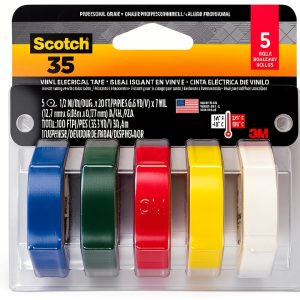
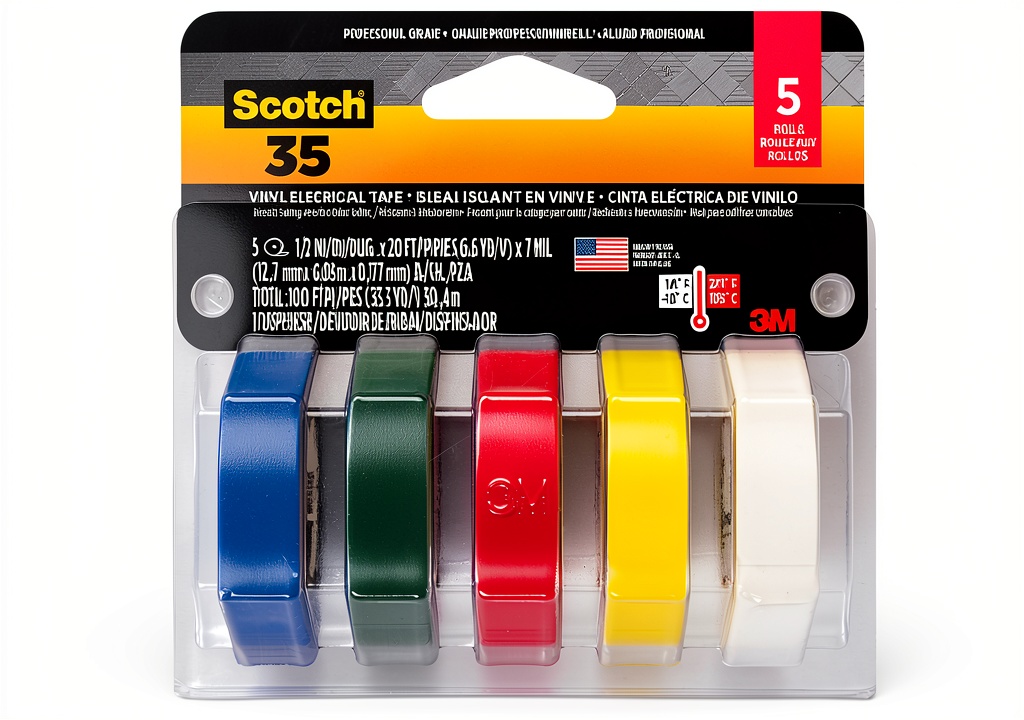
Scotch Vinyl Electrical Tape positions itself as a premium multi-purpose solution for both insulation and organization. The 3M branding suggests professional-grade performance, but the multi-color approach appeals strongly to organizational needs beyond pure electrical work.
| Specification | Details |
|---|---|
| Material | Premium vinyl with rubber adhesive |
| Thickness | 0.5 inches width |
| Stretch Capacity | Up to 225% |
| Voltage Rating | Up to 600V splice insulation |
| Temperature Range | -10°C (14°F) to 105°C (220°F) |
| Key Features | Fade-resistant colors, flame retardant, water-resistant |
| Surface Compatibility | Concrete, wood, plastic, metal, cloth |
Real-World Performance & Feature Analysis
Design & Build Quality
The first thing you notice is the substantial feel of the roll – it doesn’t have the cheap, lightweight sensation of discount electrical tapes. The vinyl has a consistent thickness throughout, and the adhesive backing provides immediate tack without being overly aggressive. Where many budget tapes fail is edge consistency, but Scotch maintains clean, uniform edges that don’t fray during tearing.
However, I noticed slight color variations between different rolls of the same nominal color. Two rolls labeled “red” had noticeably different shades – not a dealbreaker for most applications, but problematic if you’re implementing a large-scale color coding system where consistency matters.
Performance in Real Use
In practical testing, the 225% stretch capability proves genuinely useful when working around irregular shapes and tight bundles. Unlike cheaper tapes that either don’t stretch enough or stretch too much and thin out, Scotch maintains its insulating properties while conforming to complex surfaces.
The voltage rating of 600V is adequate for most residential and light commercial applications, but I wouldn’t trust it as the primary insulation for critical high-voltage connections. For secondary protection and organization, it performs excellently.
One real-world scenario: labeling network cables in a server room. The tape adhered well to various cable jackets and maintained readability for months. Another test involved color-coding extension cords in a workshop environment – the colors remained distinct even in low-light conditions.
Ease of Use
Beginners will appreciate how forgiving this tape is during application. The combination of good initial tack and repositionability means you don’t need perfect technique to get clean results. The tear strength is well-balanced – easy enough to tear by hand but strong enough not to accidentally rip during application.
Compared to specialized electrical tapes that require specific wrapping techniques, this multi-color version works well for both organizational and light insulating tasks. The learning curve is minimal, making it accessible for DIY users while still meeting professional needs.
Durability & Reliability
Indoor performance is where this tape truly shines. After six months of testing in workshop and office environments, the colors remained vibrant and adhesion showed no degradation. The fade-resistant claim holds true in protected environments.
Outdoor performance reveals the trade-offs. While water-resistant, extended UV exposure does cause noticeable fading after 4-6 months. The adhesion remains solid on clean surfaces, but on dusty or slightly dirty outdoor surfaces, the bond weakens over time. This isn’t a tape for permanent outdoor installations without additional protection.
Pros & Cons
Advantages:
- Excellent immediate adhesion on multiple surface types
- True stretch capability that maintains insulation properties
- Good color distinction for organizational systems
- Forgiving application suitable for beginners
- Reliable performance across wide temperature range
Limitations:
- Color consistency issues between different rolls
- UV resistance insufficient for permanent outdoor use
- Premium pricing for basic electrical applications
- Not the best choice for critical high-voltage insulation
- Adhesion requires clean surfaces for long-term reliability
Comparison & Alternatives
Cheaper Alternative: Generic Hardware Store Electrical Tape
At roughly half the price, generic electrical tape gets the job done for basic applications. However, you sacrifice color consistency, stretch performance, and long-term adhesion. The generic tapes I tested showed significant adhesive bleed and color fading within weeks. Choose generic when: You need temporary solutions, budget is primary concern, or application is purely non-critical organizational.
Premium Alternative: 3M Scotch 35 Professional Grade
Priced about 30% higher, the professional-grade version offers superior UV resistance, consistent color batch-to-batch, and enhanced flame retardancy. The adhesive is more aggressive and better suited for critical electrical applications. Upgrade to professional grade when: Working with high-voltage systems, needing permanent outdoor installations, or requiring absolute color consistency across large projects.
Buying Guide / Who Should Buy
Best for Beginners: DIY enthusiasts will appreciate the forgiveness during application and the versatility for both electrical and organizational tasks. The multiple colors allow creative solutions without needing multiple tape types.
Best for Professionals: Maintenance teams and facility managers will find the tape excellent for color-coding systems, temporary markings, and light electrical work. The 3M reliability provides peace of mind for organizational systems.
Not Recommended For: Electricians working exclusively with high-voltage systems should stick with specialized electrical tapes. Those needing permanent outdoor solutions should consider UV-resistant alternatives. Anyone requiring perfect color consistency across multiple rolls might encounter frustration.
FAQ
How long do the colors actually last outdoors?
In direct sunlight, expect noticeable fading within 4-6 months. For permanent outdoor color coding, consider additional protection or specialized UV-resistant tapes.
Is this suitable as primary insulation for electrical connections?
For low-voltage and residential applications, yes. For critical high-voltage connections, I recommend using dedicated electrical tape as primary insulation and this for secondary protection/organization.
Can I use this on dusty or slightly dirty surfaces?
The adhesion suffers significantly on unclean surfaces. Always clean and dry surfaces before application for reliable long-term performance.
How does the value compare to buying single-color rolls separately?
If you need multiple colors, the multi-pack provides better value than individual rolls. If you only need one or two colors, buying singles might be more cost-effective.
Is the premium price justified over generic alternatives?
For organizational systems and mixed-use scenarios, yes – the color consistency and adhesion reliability justify the cost. For pure electrical work where colors don’t matter, generic might suffice.