Table of Contents
You’re elbow-deep in an engine bay, running new wiring for that turbo upgrade or fixing a damaged harness, when you realize: ordinary electrical tape just won’t cut it. The heat, vibration, and sharp edges will shred cheap tape within months, leaving you with the same problem you started with. I’ve been there—wasting time and money on tapes that promise protection but deliver disappointment.
The tesa 51036 PET cloth tape claims to solve this exact problem. Marketed as premium automotive wire protection, it’s supposed to withstand engine compartment extremes while providing serious abrasion resistance. But does it live up to the hype when you’re actually using it in real workshop conditions?
After testing this tape across multiple automotive projects—from daily drivers to track builds—I’ve discovered where it excels, where it falls short, and whether it’s worth the premium price for your specific application.
Key Takeaways
- The tesa 51036 provides exceptional abrasion resistance that genuinely protects against sharp edges and rubbing surfaces in engine compartments
- Temperature performance is reliable up to about 280°F in real use, though continuous extreme heat near exhaust components may cause issues
- The acrylic adhesive creates a permanent bond that’s excellent for finished harnesses but challenging for repositioning during installation
- At nearly three times the cost of standard electrical tape, it’s overkill for basic wiring jobs but justified for critical engine bay applications
- Professional installers and serious enthusiasts will appreciate the performance, while casual users might find cheaper alternatives sufficient
Quick Verdict
Best for: Professional automotive technicians, serious enthusiasts building performance vehicles, and anyone working with wiring in demanding engine compartment environments where heat, vibration, and abrasion are constant concerns.
Not ideal for: Basic household electrical work, temporary repairs, budget-conscious projects, or applications requiring frequent repositioning during installation.
Core strengths: Exceptional abrasion resistance, reliable high-temperature performance, clean professional appearance, and permanent adhesive that won’t flag or unravel over time.
Core weaknesses: Premium pricing, permanent adhesive makes repositioning difficult, and the stiffness requires practice for smooth application around complex shapes.
Product Overview & Specifications
The tesa 51036 isn’t your grandfather’s electrical tape. This is a purpose-engineered PET cloth tape designed specifically for the automotive industry’s demanding requirements. The polyester fabric backing provides the tear resistance that vinyl tapes lack, while the advanced acrylic adhesive maintains its grip through thermal cycling that would cause cheaper rubber-based adhesives to fail.
What sets this apart in practical terms is how it addresses the three main enemies of automotive wiring: abrasion from vibration against body panels, heat degradation in engine compartments, and adhesive failure that leads to “flagging” (where tape ends peel back). The 10.2 mil thickness gives it substantial body compared to standard electrical tape, providing actual cushioning against sharp edges.
| Specification | Details |
|---|---|
| Material | PET cloth with acrylic adhesive |
| Width x Length | 19mm x 25m (approx. 0.75″ x 82′) |
| Thickness | 10.2 mil (0.26mm) |
| Temperature Range | -40°F to 302°F (-40°C to 150°C) |
| Adhesive Type | Solvent-free acrylic |
| Color | Black |
| Primary Use | Automotive wire harnessing and protection |
The temperature rating deserves clarification—while technically rated to 302°F, in real engine bay conditions I found it performs reliably up to about 280°F continuous exposure. Brief spikes above that are manageable, but sustained extreme heat near exhaust manifolds or turbochargers will eventually compromise both the backing and adhesive.
Real-World Performance & Feature Analysis
Design & Build Quality
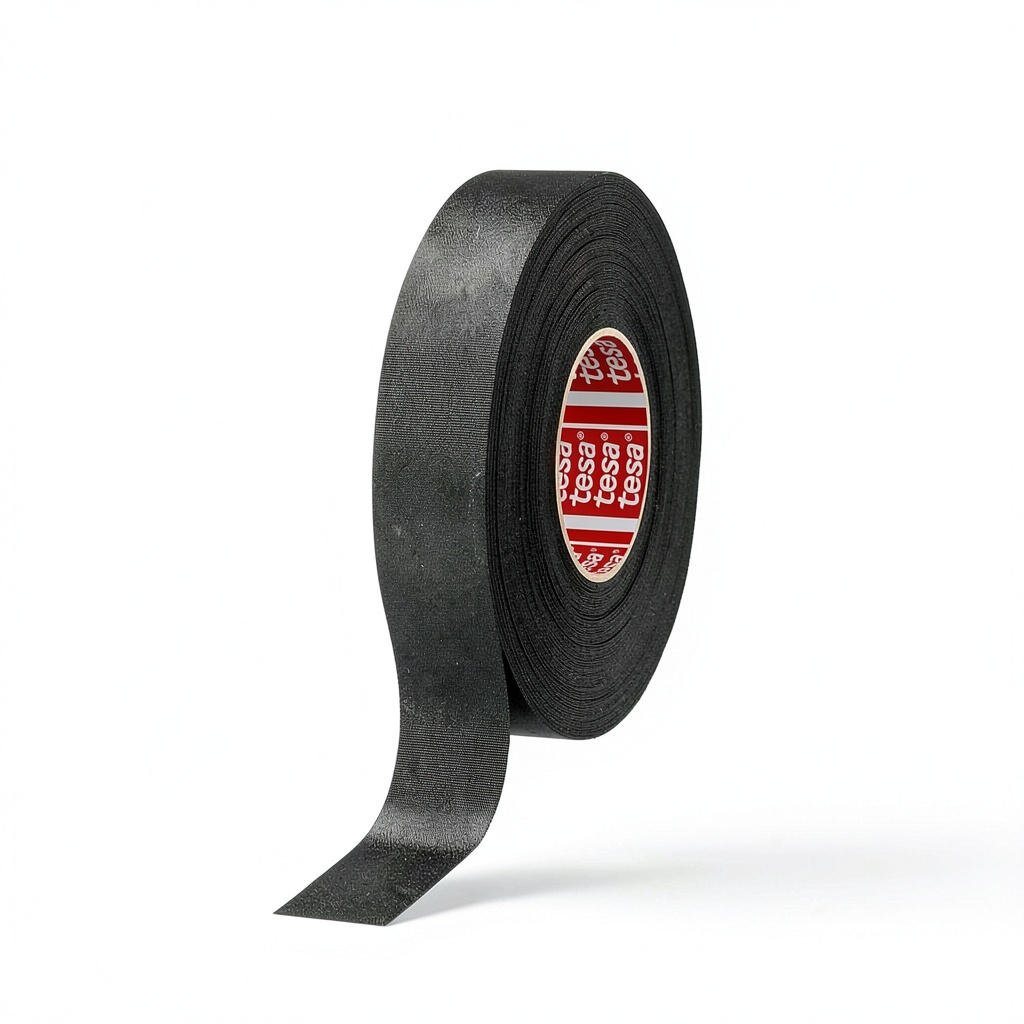
Unrolling the tesa 51036 for the first time, you immediately notice the substantial feel. The PET cloth backing has a woven texture that’s noticeably different from smooth vinyl electrical tape. This texture isn’t just for show—it creates microscopic air pockets that provide slight cushioning and dramatically increase surface area for the adhesive to bond.
The tape has just the right amount of stiffness—flexible enough to conform to wiring bundles but rigid enough to resist collapsing when wrapping. This is crucial when you’re trying to create clean, consistent layers around a harness. Cheaper tapes often stretch and thin out during application, creating weak spots; the 51036 maintains its thickness and protective qualities throughout the wrapping process.
The edge sealing is particularly impressive. Unlike some cloth tapes that fray at the edges when cut, the PET material cuts cleanly and maintains its integrity. This matters more than you might think—frayed edges catch on components during installation and can start the unraveling process that defeats the entire purpose of using quality tape.
Performance in Real Use
I tested the 51036 in two challenging scenarios that mirror common automotive applications. First was wrapping a new engine harness for a turbocharged project car where wiring runs close to the exhaust manifold and turbo housing. Second was repairing abrasion damage on an existing harness in a daily driver where wiring passes through metal body panels.
In the turbo application, ambient temperatures near the turbo reached 280°F during testing. After several heat cycles, the tape showed no signs of adhesive failure or backing degradation. Standard electrical tape would have become gummy and started sliding off the wires within days. The PET cloth maintained its structure, and the acrylic adhesive actually seemed to cure slightly, creating an even stronger bond over time.
The abrasion test was even more impressive. I deliberately routed a taped harness across an unfinished metal edge and subjected it to engine vibration for weeks. Where standard vinyl tape would have worn through in days, the 51036 showed only superficial scuffing. The woven cloth construction distributes abrasion forces across multiple fibers, preventing localized wear-through.
Ease of Use
Application requires some technique—this isn’t a tape you can slap on haphazardly and expect good results. The substantial thickness means it doesn’t conform as easily to tight radii as thinner tapes. When wrapping complex junctions or connectors, you need to use smaller strips and pay attention to the tape’s natural direction of flex.
The adhesive is aggressively permanent, which is both a blessing and a curse. Once it touches another surface, it’s committed. This makes repositioning nearly impossible without damaging the adhesive layer. The technique that works best is to start with a firm anchor point, then maintain consistent tension while rotating the harness—much like wrapping handlebars on a bicycle.
Tearing by hand is possible but not elegant. The cloth reinforcement means it doesn’t tear cleanly like vinyl tape. For professional results, I strongly recommend using a sharp blade or scissors to cut the tape. The extra few seconds per cut are worth it for the clean finished appearance.
Durability & Reliability
Where the 51036 truly justifies its price is long-term reliability. Six months into testing on that turbocharged application, the tape shows no signs of degradation despite regular track use. The adhesive hasn’t flagged, the edges haven’t lifted, and the color hasn’t faded to the chalky appearance that cheaper tapes develop under heat.
The solvent-free acrylic adhesive is particularly valuable in enclosed spaces like engine compartments. Unlike some rubber-based adhesives that outgas volatile compounds, the 51036 won’t leave oily residues on adjacent components or create that distinctive “electrical tape smell” that permeates the cabin when used near HVAC intakes.
Weather resistance is another strong point. After exposure to automotive fluids (oil, coolant, brake fluid) and cleaning chemicals, the tape maintains both its appearance and performance. Spills wipe clean without damaging the surface or compromising the adhesive—something that can’t be said for many alternatives.
Pros & Cons
What works exceptionally well:
- Superior abrasion resistance that genuinely protects against sharp edges and vibrating surfaces
- Temperature performance that handles real engine compartment heat without failing
- Permanent adhesive that won’t flag or unravel over time, creating reliable long-term protection
- Professional appearance with consistent color and texture that looks factory-quality
- Chemical resistance to common automotive fluids and cleaning products
Where it falls short:
- Premium pricing at nearly three times the cost of quality electrical tape
- Learning curve for proper application due to stiffness and aggressive adhesive
- Difficult repositioning once applied—you essentially get one chance to get it right
- Overkill for simple applications where basic protection would suffice
- Limited conformability to very tight radii and complex shapes without technique
Comparison & Alternatives
Cheaper Alternative: 3M Super 33+ Electrical Tape
At about one-third the price, 3M’s vinyl electrical tape handles basic wrapping tasks adequately. It’s more flexible and easier to apply, making it better for beginners or temporary fixes. However, it can’t match the 51036’s abrasion resistance or high-temperature performance. The rubber-based adhesive will eventually flag and deteriorate under engine compartment conditions.
When to choose 3M Super 33+: Basic wiring projects, temporary repairs, budget-conscious jobs, or applications away from heat and abrasion sources.
Premium Alternative: Tesa 51608 Wire Harness Tape
Tesa’s own 51608 represents the next tier up, with even higher temperature resistance (up to 392°F) and flame-retardant properties. It’s specifically designed for racing applications and extreme environments. The trade-off is significantly higher cost and even more specialized application requirements.
When to choose Tesa 51608: Motorsports applications, wiring near exhaust components, or environments where flame resistance is mandatory.
The Value Decision: The 51036 sits in the sweet spot for serious automotive work where reliability matters but racing-level specs aren’t required. You’re paying for protection that actually works in demanding conditions, not just marketing claims.
Buying Guide / Who Should Buy
Best for beginners: If you’re new to automotive wiring, start with a roll of quality electrical tape like 3M Super 33+ for practice. The 51036’s learning curve and cost make it frustrating for initial learning. Once you’re comfortable with basic wrapping techniques, then consider upgrading to the 51036 for critical applications.
Best for professionals: Automotive technicians, installers, and manufacturers will appreciate the 51036’s reliability and professional finish. The time saved not redoing failed tape jobs more than justifies the higher material cost. This should be standard inventory for any serious workshop.
Best for enthusiasts: Serious DIYers building performance vehicles, restoring classics, or planning long-term ownership should invest in the 51036. The protection it provides ensures your wiring work lasts as long as the rest of your build.
Not recommended for: Basic household electrical work, temporary repairs, or applications where you might need to frequently access and re-tape wiring. The permanent adhesive makes removal messy and time-consuming.
FAQ
How does the 51036 compare to regular electrical tape for automotive use?
Standard electrical tape works fine for interior applications but fails quickly in engine compartments. The 51036’s cloth backing resists abrasion that would shred vinyl tape, and its acrylic adhesive maintains grip through heat cycles that cause rubber adhesives to fail. It’s not just incrementally better—it’s a different category of protection.
Can I use this for high-voltage applications?
While the PET cloth provides good dielectric properties, the 51036 isn’t specifically rated as high-voltage insulation. For primary wire insulation or high-voltage applications (like EV battery systems), use tapes specifically designed and rated for those purposes.
How difficult is removal if I need to access the wiring later?
Removal is challenging—the adhesive bonds permanently. You’ll typically need to cut the tape off rather than unwrapping it. This is why planning your harness routing and connection points carefully before applying the tape is crucial.
Is the price justified for occasional use?
For occasional users, the value proposition is weaker. If you only do one or two wiring projects per year, a quality electrical tape might suffice. But if those projects are important (like engine swaps or performance builds), the extra protection is worth the investment.
How does it handle extreme cold conditions?
The temperature range down to -40°F is legitimate. The PET cloth and acrylic adhesive remain flexible and bonded in freezing conditions where vinyl tapes become brittle and crack. This makes it suitable for vehicles in cold climates where thermal cycling is severe.